
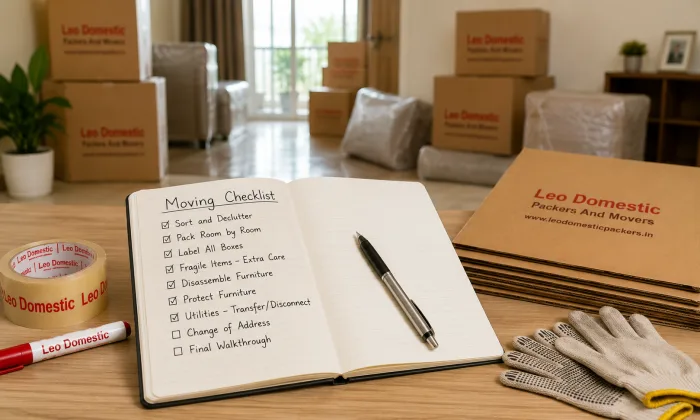
Planning a home move? Follow this complete checklist to pack, organize, and relocate your household without last-minute stress.
Start Planning Early
A successful household move begins weeks before the actual moving day, not the night before. The single biggest cause of stressful, chaotic moves is starting too late. As soon as your moving date is confirmed, create a moving timeline that works backward from that date, covering everything from sorting belongings and requesting quotes to booking your packers and movers and notifying utility providers.
A good rule of thumb is to start active planning at least three to four weeks in advance for a local move, and six to eight weeks in advance for an interstate relocation. This gives you enough time to declutter properly, compare moving companies, and handle administrative tasks like updating your address with banks, schools, and government offices without last-minute panic.
Declutter Before You Pack
Moving is the perfect, and often only, opportunity many people take to seriously sort through their belongings. Before a single box is packed, go through each room and separate items into four categories: keep, donate, sell, and discard. This single step can reduce the total volume of your move by 20 to 30 percent, which directly reduces packing time, the number of cartons needed, and your final moving cost.
Start decluttering with the easiest categories first — expired pantry items, old documents, single-use kitchen gadgets you never use, and clothes you have not worn in over a year. Larger decisions, like furniture you are unsure about, can be tackled once you have momentum. Selling unwanted furniture or electronics online before the move can also offset some of your relocation costs.
Planning a move soon?
Get a free, transparent quote from Leo Domestic Packers And Movers.
Use Quality Packing Materials
Invest in bubble wrap, stretch film, and sturdy corrugated cartons rather than relying on old boxes from grocery stores, which are often weaker and inconsistent in size. Quality packing materials protect fragile items like glassware, electronics, and furniture during transit, and they also stack more securely inside the moving vehicle, reducing the risk of shifting during transport.
Different items need different materials. Books and documents do best in small, sturdy boxes that do not become too heavy to lift. Clothing can go in wardrobe boxes or vacuum-sealed bags to save space. Fragile decor and crockery need individual bubble wrap and should never be packed loosely, even in a well-padded box, since items can still shift and collide during a long drive.
Label Every Box
Clearly label each box with its contents and destination room using a permanent marker or printed labels. This single habit makes unpacking significantly faster and helps your moving team place boxes correctly at your new home without you needing to direct every single carton individually.
A useful system is color-coding by room — for example, blue labels for the kitchen, green for the bedroom, and red for fragile items regardless of room. Numbering boxes and keeping a simple master list of what is inside each numbered box also helps if anything needs to be located quickly before full unpacking is complete.
Room-by-Room Packing Tips
Different rooms in your home require different packing approaches. The kitchen is usually the most time-consuming room to pack because of fragile items, appliances, and miscellaneous small items — start here early and pack items you use less frequently first, leaving daily essentials for last.
Bedrooms are generally the easiest to pack, with clothing, bedding, and personal items that pack quickly into wardrobe boxes and soft bags. Living rooms often contain the bulkiest, heaviest items such as sofas, entertainment units, and bookshelves — these benefit most from professional furniture-moving techniques and protective blankets. Bathrooms should be packed last since they are used until the final moments before departure, and any liquids should be sealed in leak-proof bags to prevent spills onto other items.
What to Pack Yourself vs. Leave to Professionals
Many people wonder whether to pack everything themselves or leave the entire process to their moving company. A balanced approach often works best: personal essentials like documents, jewelry, medications, and a few days of clothing are worth packing yourself in a clearly marked "essentials" bag that travels with you rather than in the moving truck.
For everything else — furniture, electronics, fragile decor, and bulk household items — professional packing is usually worth the investment. Trained packers know how to protect items correctly, use materials efficiently, and pack in a way that maximizes both protection and space inside the moving vehicle, often preventing damage that would otherwise lead to costly replacements.
Moving Day: What to Expect
On moving day itself, a professional team will typically arrive within an agreed time window, conduct a final walkthrough with you to confirm what needs to be loaded, and begin systematic loading based on weight and fragility, with heavier furniture loaded first and fragile boxes loaded last for easier access and reduced shifting.
Having a clear plan for moving day reduces stress significantly. Keep essential documents, chargers, and a small overnight bag separate from the main shipment, ensure someone is available to answer questions from the moving team throughout the day, and do a final walkthrough of the empty property before departure to check cupboards, drawers, and storage areas for anything left behind.
Book Professional Packers
Hiring experienced packers and movers like Leo Domestic Packers And Movers ensures your household items are packed, loaded, and transported safely, with trained staff handling every step from the initial survey to final unpacking at your new home. Beyond the physical labor, professional movers bring structured processes, quality materials, and years of problem-solving experience that a self-managed move simply cannot replicate.
When choosing a moving company, look for transparent pricing, verified customer reviews, and clear communication about what is and is not included in your quote. A reputable company will always provide a detailed, written estimate and will never pressure you into last-minute add-on charges once the move has already begun.